Social media works for every specialty — but not the same way. The universal engine (education, consistency, trust metrics) and how it flexes from dermatology to cardiology to pediatrics.
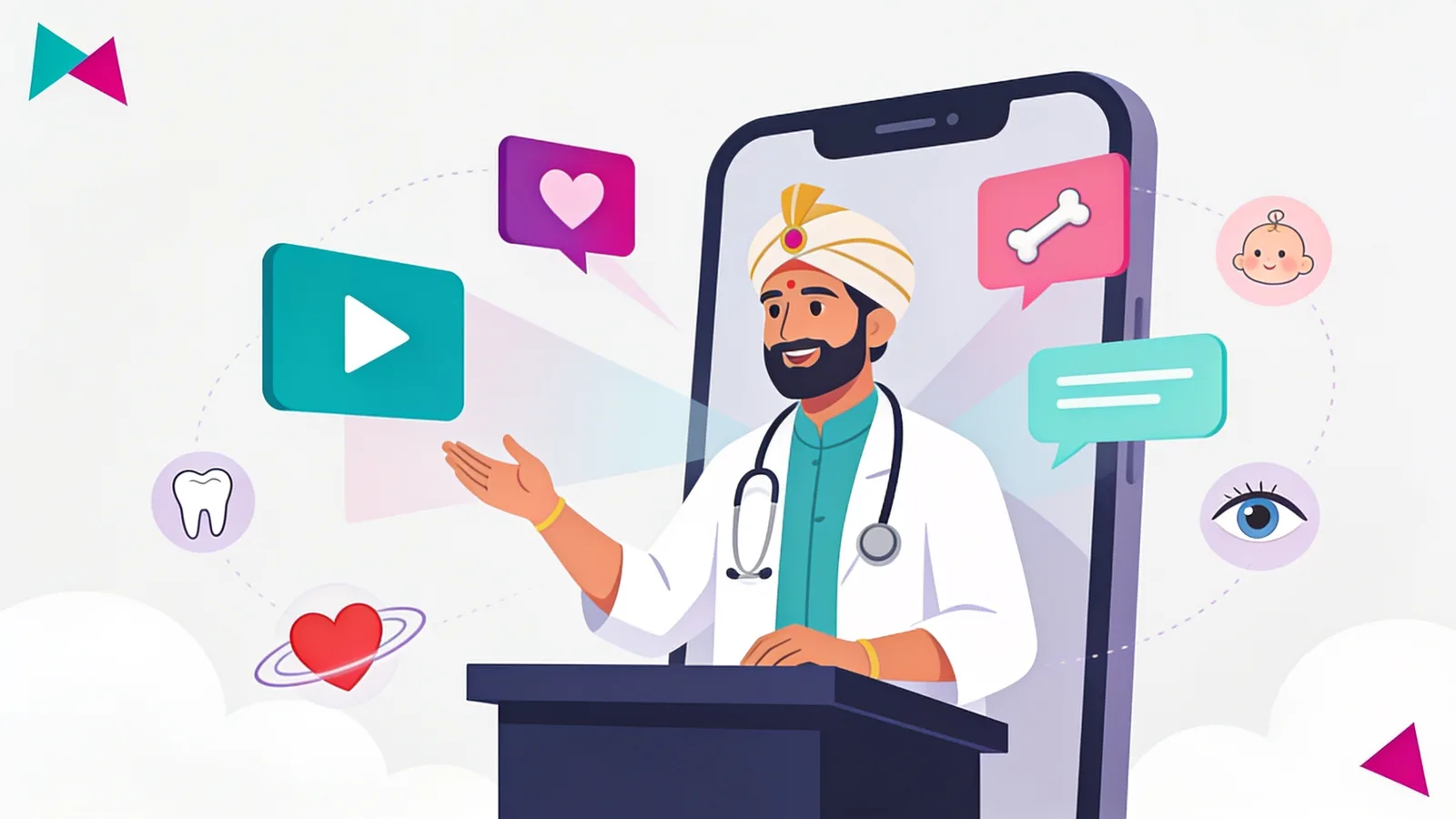
Does social media marketing work for doctors? Yes — for every specialty, but never the same way. A dermatologist's transformations, a cardiologist's myth-busting, a pediatrician's parent-calming explainers: the engine underneath is identical, the fuel differs. Most doctors fail at social not because their specialty "doesn't suit it" but because they copied another specialty's fuel.
The universal engine (every specialty, no exceptions)
- Education over promotion: answer what patients actually ask, in the language they ask it — permitted by the NMC precisely because it serves patients. (The rules, plainly.)
- The doctor's face and voice: patients follow humans, not logos — the entire basis of the personal brand engine.
- Batch production: one monthly shoot, 10–15 scripted reels, 2–3 doctor-hours. Consistency without consuming the practice.
- Trust metrics: shares and saves over likes; inquiries over reach — the hierarchy that fills OPDs.
How the engine flexes by specialty
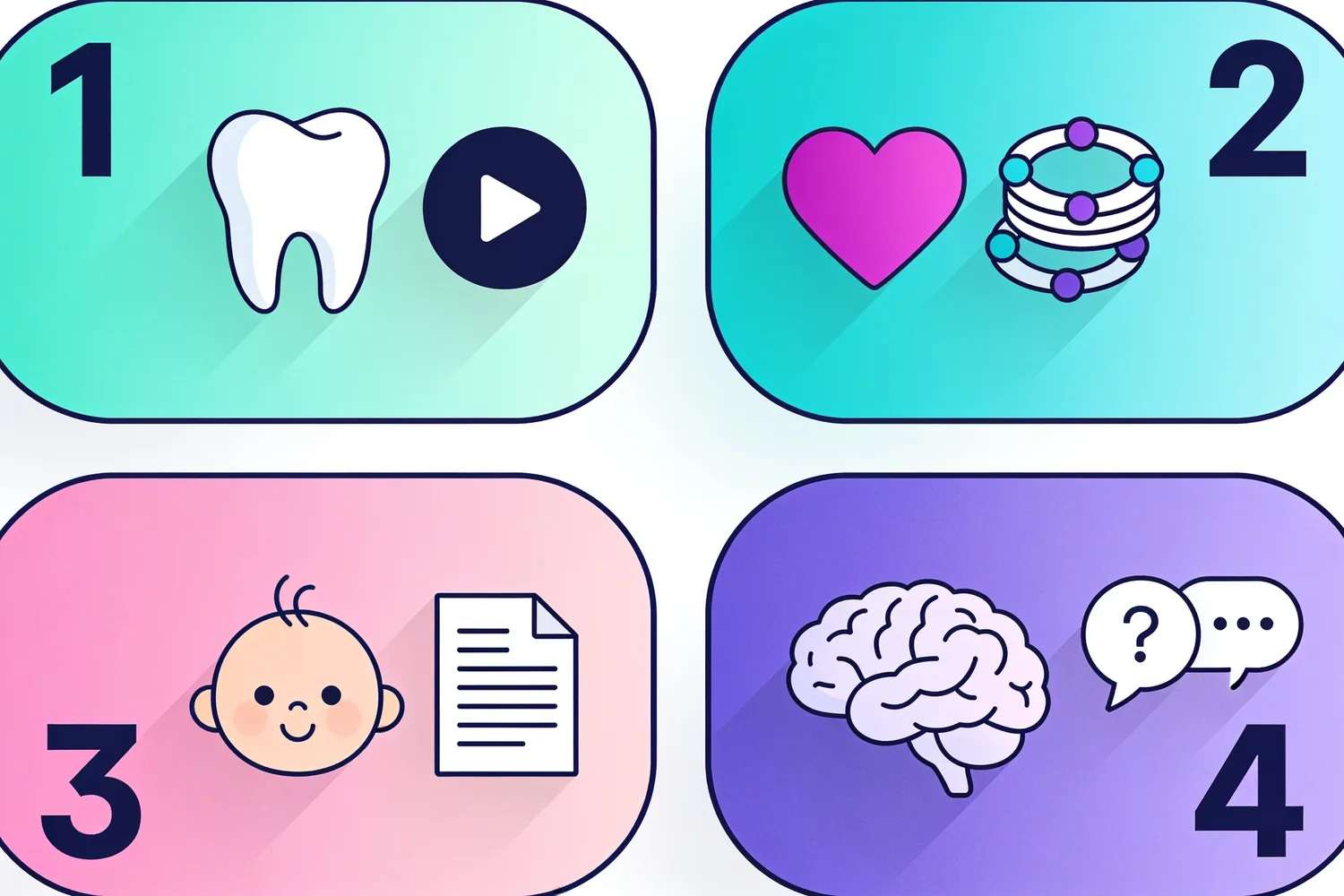
Visual specialties (dermatology, dental, aesthetics): consented before/after is the superpower — with honest framing, always. We wrote the dental version in full; dermatology runs the same pillars with skincare myth-busting as the hook engine.
High-stakes specialties (cardiology, oncology, neurology): authority and reassurance. Symptom literacy ("which chest pain is an emergency?"), treatment demystification, recovery stories told with gravity. No fear hooks — the specialty carries enough fear already; the doctor who lowers it wins the family's trust.
Family specialties (pediatrics, gynecology): the audience is parents and partners, not patients. Seasonal illness guides, vaccination mythbusting, "when to worry" frameworks — shared into family WhatsApp groups, which is exactly the distribution you want. Our 1.8M-view gynecology case ran on precisely this.
Invisible specialties (nephrology, endocrinology, psychiatry): long-condition companionship. Diabetes routines, dialysis-life answers, stigma-aware mental health content — smaller audiences, dramatically higher patient conversion, because nobody else is speaking to them.
Which platform deserves the effort?
Instagram carries reach and familiarity for most specialties; YouTube rewards the long explainers high-stakes specialties need; and your Google Business profile posts — the least glamorous surface — influence patients at the exact moment of choosing. Post the same asset to all three; produce once, distribute everywhere.
How often should a doctor actually post?
Three to four short videos a week is the proven sweet spot — enough for the algorithm to keep showing you, little enough to sustain for years. The sustainable math: one two-to-three-hour batch shoot a month produces 12–15 reels; captions, posting and comment replies take a trained team member 30 minutes a day. The doctor's personal time cost settles under three hours a month, which is the difference between a presence that compounds and the far more common pattern — three enthusiastic weeks followed by eight silent months. Consistency at a modest pace beats intensity at an unsustainable one, every time, in every specialty.
Repurpose ruthlessly: one strong explainer becomes a reel, a YouTube short, a carousel, a Google profile post and a WhatsApp status. Produce once, distribute five times — the audiences barely overlap.
What are the compliance guardrails on social?
- Written consent for any patient-identifiable content: every face, every before/after, every story — governed by the consent playbook, with revocation honoured.
- Education, not consultation: answer in general terms publicly; move anything personal to the clinic's channels. "Please get this examined" is the right public reply to a symptom comment.
- Claims discipline: no superlatives, no guaranteed outcomes, no "best in city" — the same NMC and ASCI rules that govern ads govern reels.
- Comment hygiene: a daily five-minute pass — answer genuine questions warmly, delete spam, never argue. The comment section is part of the content.
The 30-day start for any specialty
- Week 1: pick the niche angle; write 15 hooks from real OPD questions; consent forms ready.
- Week 2: first batch shoot — 12 reels across your specialty's lead pillar.
- Week 3: publish 3–4/week; answer every comment; mirror winners to the Google profile.
- Week 4: read saves, shares and inquiries — not likes; double down on what moved patients.
When do appointments actually start arriving?
Set the expectation honestly or the program dies of impatience. Month one builds the library and the habit; reach is small and that is normal. Months two and three are where the compounding starts — a reel or two finds its audience, profile visits climb, and the first "I watched your videos" patient walks in (they rarely comment or DM first; they simply book). By month six, a consistent practice typically sees social-attributed inquiries weekly and — the quieter win — a higher conversion rate on every other channel, because patients who checked your profile arrive pre-sold. The practices that fail are almost never the ones with weak content; they are the ones that stopped in week five, one month before the curve bent.
In short: one engine, specialty-specific fuel, judged in appointments. Want the engine run for you? That is the service — or test your current presence with the free audit.
Written by Gaurav Malik
Chief Growth Magician · Founder & Growth Strategist
Founder & Growth Strategist at Digital Magicians — India's healthcare-only growth agency.
Reviewed and published by Vikas Dahiya for content.
Meet the full team