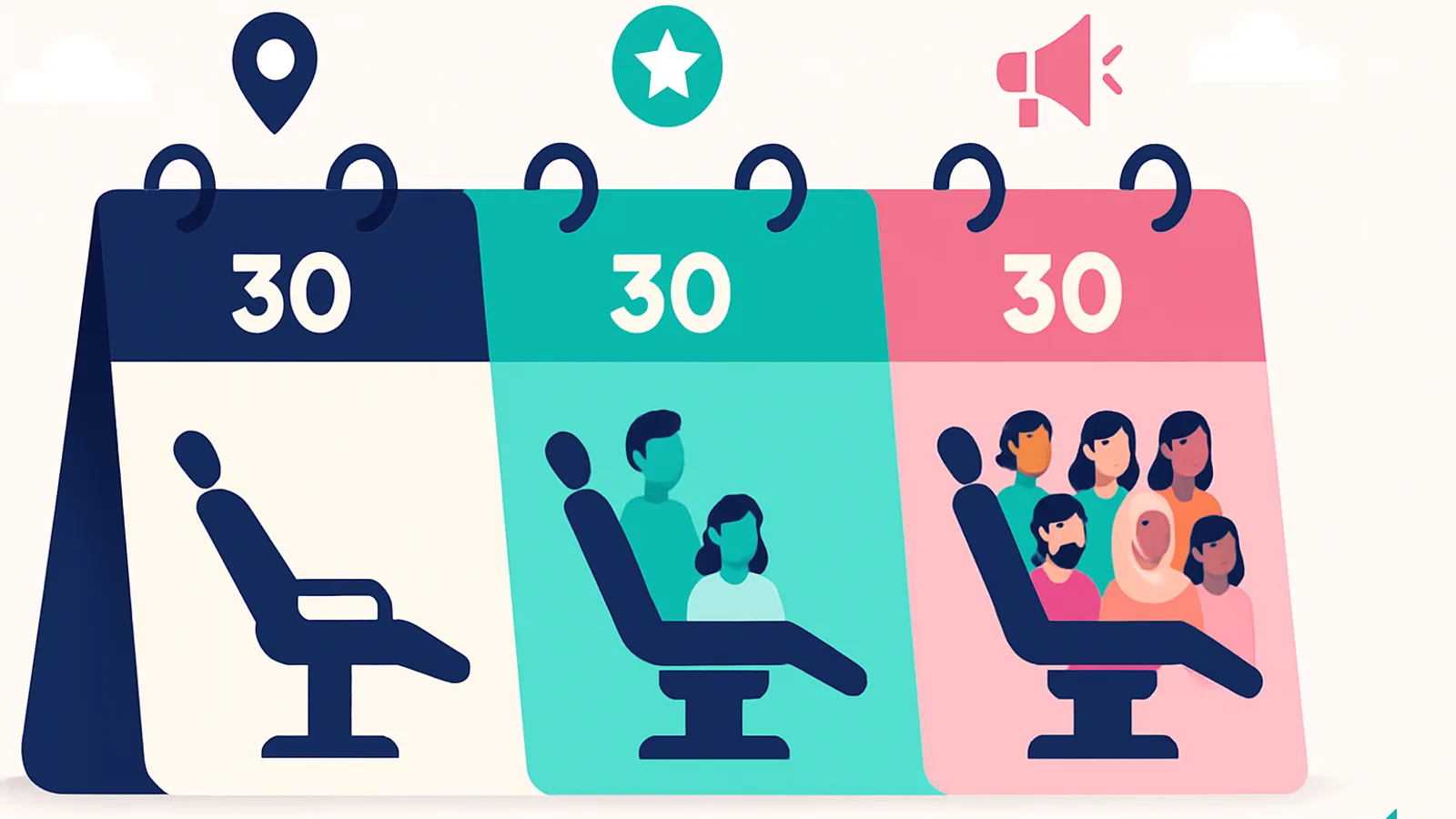
Patients choose doctors they feel they already know. Here is the exact 5-month engine that turns a respected clinician into a trusted local voice — without consuming the doctor's week.
A patient rarely says "I chose your hospital." They say "I saw her videos" or "he explained it so simply." Patients choose doctors they feel they already know — and in 2026 India, that familiarity is built on a phone screen long before the first consultation.
We have run this engine end to end: it took a Sonipat-area gynaecologist from 5,500 followers to a 1.8-million-view medical voice in five months, with 30–40 consultations a month walking in from content alone. This article is that playbook, generalized.
Why a personal brand beats a clinic page
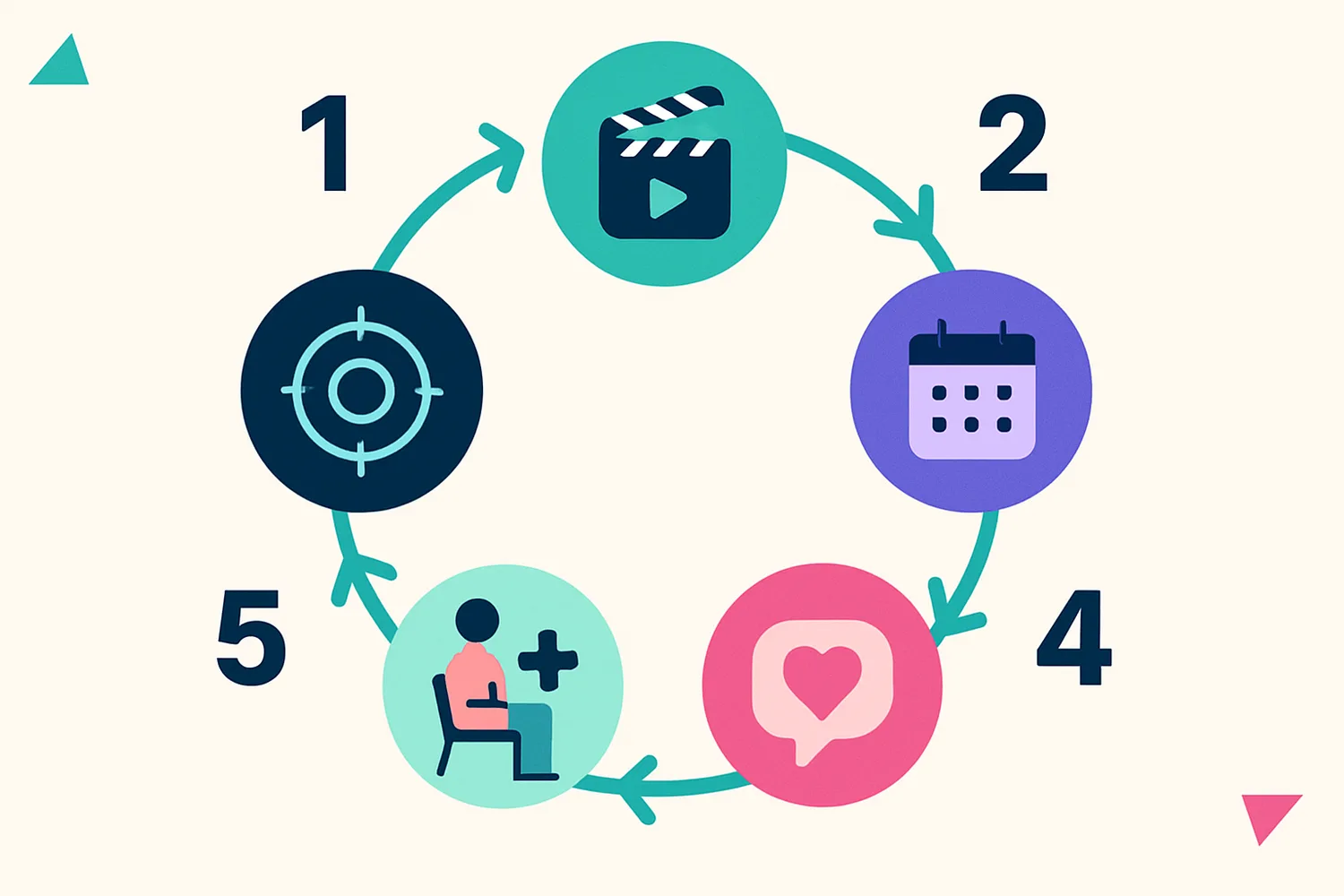
A clinic page informs. A doctor's face, voice and daily advice build para-social trust — the sense of already knowing someone. For a patient deciding who touches their body or their child, that trust is the entire decision. It also compounds: every reel published keeps working for years, while an ad stops the day you stop paying.
There is a second, colder reason: on aggregator platforms you are one listing among forty, ranked by someone else's algorithm and undercut by ads. Your own brand is the one asset no platform can reprice.
Month 1: find the niche, not a "doctor page"
The single biggest mistake is launching "Dr. X Official." Nobody follows a noticeboard. The engine starts with a positioning patients instantly understand — a pregnancy companion, a knee-pain coach, a child-nutrition guide. The niche decides everything downstream: hooks, topics, even which patients walk in.
A good niche test: can a stranger describe your page in five words? "She explains pregnancy in Hinglish" passes. "He posts medical content" fails.
Month 2: build the production machine
Doctors do not have time to be creators — and should not try to be. The machine: one batch shoot a month, 10–15 reels per session, scripts written in advance with hooks tested against real patient questions. The doctor gives 2–3 hours; everything else — editing, captions, scheduling, comment triage — is someone else's job.
- Scripts first: every reel opens with the patient's inner voice ("Pregnancy mein Maggi kha li… baby ko kuch hoga?"), medical accuracy underneath.
- Batch everything: one location, one outfit change, fifteen scripts, two hours.
- 45–60 seconds: long enough to teach one thing, short enough to finish.
Months 3–4: consistency and the trust metrics
Post 3–4 reels a week without gaps. The algorithm rewards consistency, but more importantly patients reward familiarity — recognition needs repetition. Watch the metrics that signal trust, not vanity: shares (a personal recommendation — "dekho, yeh doctor sahi bol rahi hai"), saves (your content is reference material), and comment questions (patients rehearsing the consultation).
Expect the compounding to feel slow then sudden: our gynaecologist crossed 1 lakh monthly views in month two and never dropped below it again — six reels eventually passed the 1-lakh mark each.
Month 5: own every surface, then convert
A personal brand is not an Instagram account — it is owning every place a patient might look for you. A search-optimized doctor page on the website, a managed Google profile in your own name, your reels mirrored where deciding patients see them. That is when the halo forms: name searches rank, reviews accelerate, and the institution behind you fills too.
Then count honestly: consultations that mention content, procedures chosen because of it, new practice lines the audience asks for. Our case built a monthly lactation-class line — 10–15 mothers per batch — entirely from audience demand.
The rules that keep it safe
Everything stays inside NMC and ASCI lines: education, not solicitation; no outcome promises; patient stories only with written consent. The compliant lane is wide enough — the engine above never leaves it. (Plain-language rules: can doctors advertise in India?)
What it costs — in time and money
The doctor's cost is 2–3 hours a month: one batch shoot plus WhatsApp approvals. The production cost depends on who runs the machine: in-house (a phone, a ₹3,000 mic, a part-time editor) lands around ₹15–25K a month; a professional engine with scripting, shooting and distribution runs ₹35–60K. Measured against one additional consultation a day — which is what a working engine produces by month four — it is the highest-ROI line in most practice budgets.
The four mistakes that stall doctor brands
- Starting without a niche. "Health tips by Dr. X" competes with everyone and resonates with no one.
- Posting in bursts. Fifteen reels in January and silence till April teaches the algorithm — and patients — to forget you.
- Chasing trends over questions. Dance trends get views from people who will never book; patient questions get patients.
- Quitting in month three. Every account we have grown looked "stuck" right before it compounded. The gynaecologist's biggest reel came after fourteen quiet weeks.
Want the engine without becoming a creator? That is literally the service — digital marketing for doctors — or start by seeing what your current presence converts with the free growth audit.

Written by Gaurav Malik
Chief Growth Magician · Founder & Growth Strategist
Founder & Growth Strategist at Digital Magicians — India's healthcare-only growth agency.
Reviewed and published by Vikas Dahiya for content.
Meet the full team