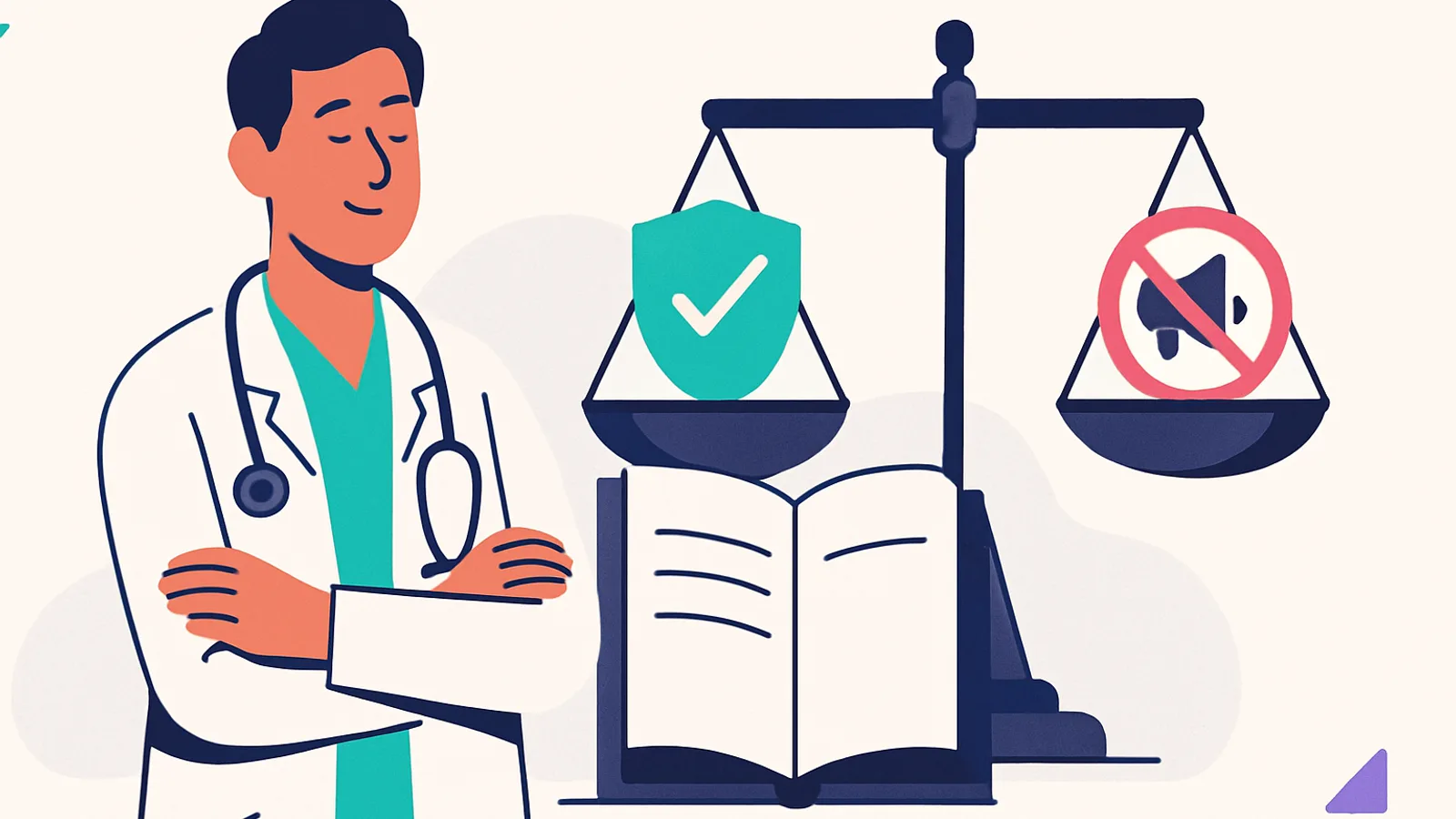
Yes — with rules. The definitive plain-language answer to the question every Indian doctor asks quietly: what the NMC actually permits, what it bans, and the gray zones decided case by case.
Asked directly: yes, doctors can advertise in India — if "advertise" means making accurate information about yourself and your services findable. Doctors cannot solicit — if "solicit" means superlatives, guaranteed cures, inducements and fear. The entire compliance question is learning where that line runs.
This is the definitive version of the answer we give every doctor who asks quietly. (The detailed rulebook walk-through lives here; this article is the decision framework.)
The legal landscape in ninety seconds
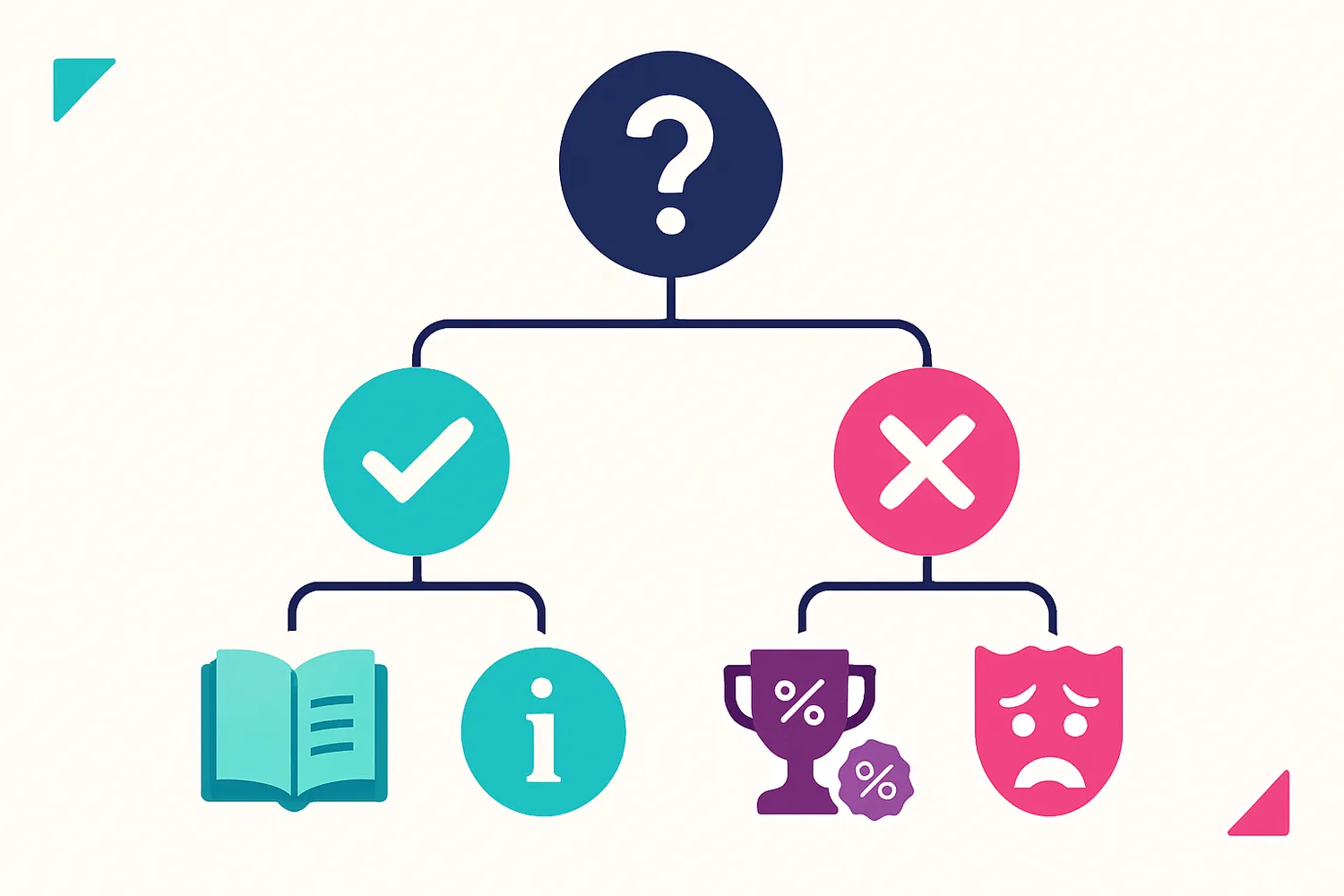
Three layers govern you. The NMC's ethics regulations (carrying forward the MCI code) bar solicitation but explicitly allow formal announcements and factual information. The ASCI health code bars misleading health claims in any advertisement. The Consumer Protection Act makes misleading ads actionable with real penalties — and fake reviews fall squarely under it. None of the three bans visibility, education or accurate information.
Clearly allowed — do these freely
- A website and Google profile with your qualifications, timings, fees and services, stated as facts.
- Patient education in any format — articles, reels, talks. Teaching is not soliciting.
- Practice announcements: a new clinic, new equipment, changed timings, a health camp.
- Search and social ads that carry accurate, claim-free information ("Dermatology consultations in Andheri, Mon–Sat").
- Consented, promise-free patient testimonials in the patient's own words.
Clearly banned — never, in any format
- Superlatives: "best", "No. 1", "most experienced" — including in hashtags and ad keywords you write.
- Outcome guarantees: "100% success", "permanent cure", "guaranteed results".
- Paying for patient referrals, or fee-splitting dressed as "commissions".
- Fake or purchased reviews — an offense under consumer law, not just a policy breach.
- Fear-based pressure: "ignore this symptom and risk your life — book today."
The gray zone, decided case by case
Fees may be stated; flash discounts read as inducement. Before/after images can be education with written consent, honest framing and no promises — and solicitation without them. A congratulatory post about a recovered patient is fine from the patient, risky from you. The reliable test: would you defend this in front of your medical college professor? If the answer needs a lawyer, rewrite the creative.
Why the compliant lane is enough
Everything that actually grows a practice lives inside the lines: being findable (local SEO), being trusted (genuine reviews), being known (education-first content), and being bookable (WhatsApp, online scheduling). We have filled OPDs for 18+ specialties without one superlative — see 27 compliant advertisement ideas for the full menu.
The platforms add a second rulebook
Even fully NMC-compliant ads must clear Google's and Meta's healthcare policies: no personal-health targeting, restricted claims, and landing pages that match the ad's promise. Google additionally limits some medical categories and requires certification for others. Practically: write ads a regulator could read, point them at honest treatment pages, and platform review becomes a formality instead of a recurring rejection.
And the penalties recap, so the stakes stay concrete: council notices and possible suspension on the NMC side, compensation orders under consumer law, ad-account bans on the platform side — and the WhatsApp-group screenshot that outruns them all. The compliant lane is not just safer; it is cheaper than any of those bills.
The honest close: the rules are not the obstacle to growth. An empty funnel is. If you want a growth plan that a regulator could read over your shoulder, start with the free practice audit.
Written by Gaurav Malik
Chief Growth Magician · Founder & Growth Strategist
Founder & Growth Strategist at Digital Magicians — India's healthcare-only growth agency.
Reviewed and published by Vikas Dahiya for content.
Meet the full team