
A genuine patient story is the strongest marketing a practice owns — and the fastest way into trouble when consent is sloppy. The lawful, DPDP-safe playbook for collecting and using testimonials.
Nothing sells care like a patient saying "they gave me my life back." And nothing lands a practice in front of a medical council faster than that same quote used without proper consent.
Testimonials sit at the intersection of three rulebooks — NMC ethics, the DPDP Act, and consumer-protection law — plus the platform policies of Google and Meta. This playbook keeps you inside all of them while still using the most persuasive asset you own.
The legal frame in one minute
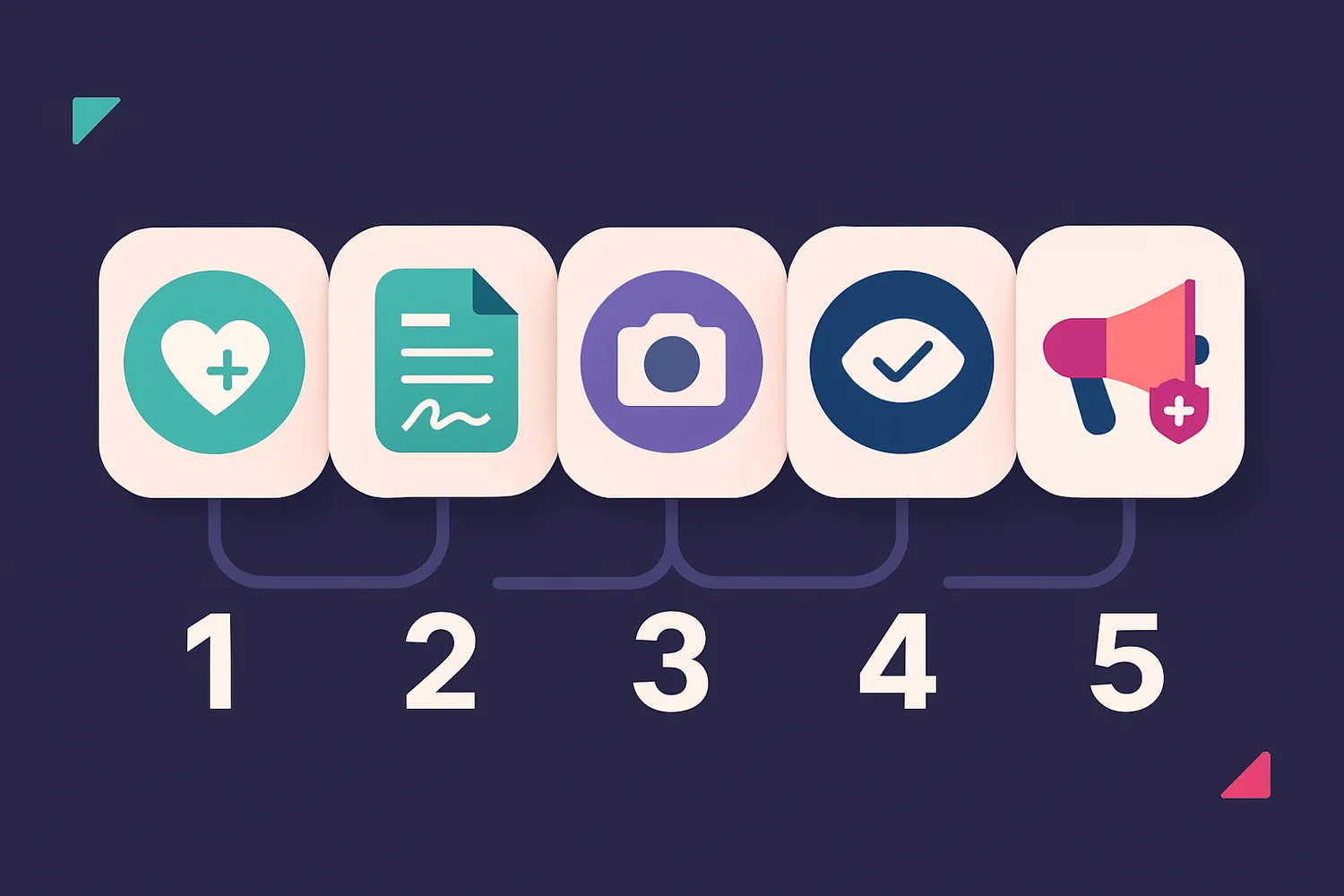
NMC ethics allow patient testimonials that are genuine and free of outcome promises — what they ban is you manufacturing praise or implying guaranteed results. DPDP treats health information as sensitive personal data: using it requires specific, informed, revocable consent. Consumer law makes fabricated testimonials actionable as misleading advertising. Summary: real patient, real words, real signature, real right to withdraw.
The consent form that actually protects you
A WhatsApp "ok" is not consent for marketing use. The form that protects both parties specifies:
- What exactly will be used — written quote, photo, video, before/after images.
- Where exactly — website, Instagram, Google profile, print. Each surface named.
- Identity level — full name, first name, or anonymized. The patient picks.
- Clinical detail limits — what condition/procedure may be mentioned, and nothing beyond it.
- Revocation — plain words saying they can withdraw anytime, and how. Then actually take content down when asked.
Signed, dated, stored with the patient record. Two minutes of paperwork that converts your best marketing from a liability into an asset.
Collecting stories without pressure
Ask at the moment of genuine gratitude — a resolved problem, a completed recovery — and ask open questions: "What were you worried about before coming? What would you tell someone with the same problem?" Never script praise, never trade discounts for testimonials (that converts a story into an inducement), and accept "no" gracefully. Patients who decline testimonials often still leave reviews — a lighter ask with its own system.
Formats, ranked by power and risk
- Video testimonial: most persuasive, most identifiable — needs the fullest consent and the most care with clinical detail.
- Written quote with first name: the workhorse. Persuasive, lower risk, easy to anonymize further.
- Before/after imagery: powerful in dental and derm; requires explicit image consent, honest framing and a "results vary" note — misused, it is the fastest route to an ASCI complaint.
- Case-study narrative: anonymized by design ("a 54-year-old teacher from Pune") — the format we use for our own client case studies, for the same reasons.
The five mistakes that undo everything
- Using a grateful WhatsApp message publicly without asking. Gratitude is not consent.
- Adding outcome language the patient never said ("100% cured!").
- Identifying a patient in a reply to their Google review — confirmation is itself disclosure.
- Keeping content live after a withdrawal request.
- Testimonials for conditions patients reasonably expect privacy about — infertility, mental health, HIV — without extra anonymization care.
A workflow your front desk can run
- 1. Flag: the doctor marks a genuinely delighted patient in the day list — no one else initiates.
- 2. Ask: front desk offers the consent form with a plain-language explanation; "no" ends it gracefully.
- 3. Capture: quote or video taken the same visit, exactly within what the form allows.
- 4. File: signed form scanned against the patient record; content tagged with its permitted surfaces before it goes anywhere.
Review the testimonial library quarterly: refresh consent for anything older than two years, retire content for withdrawn consents the same day, and rotate stories so your proof stays as current as your reviews.
Handled this way, testimonials join reviews and content as compounding trust assets — the credibility layer of the whole patient-acquisition system. Want your current consent practices checked? The free audit includes a compliance pre-flight of exactly these risks.

Written by Gaurav Malik
Chief Growth Magician · Founder & Growth Strategist
Founder & Growth Strategist at Digital Magicians — India's healthcare-only growth agency.
Reviewed and published by Vikas Dahiya for content.
Meet the full team