One implant case can be worth fifty cleanings. Marketing for implants is its own discipline: longer decisions, bigger fears, higher stakes. The playbook, stage by stage.
Why does implant marketing deserve its own playbook? Because the patient is different. Someone booking a cleaning decides in a day. Someone considering implants researches for weeks, fears the surgery, worries about the cost, and asks their family first. One completed case can be worth more than a month of routine chairs. Marketing that treats both patients the same wastes the clinic's biggest opportunity.
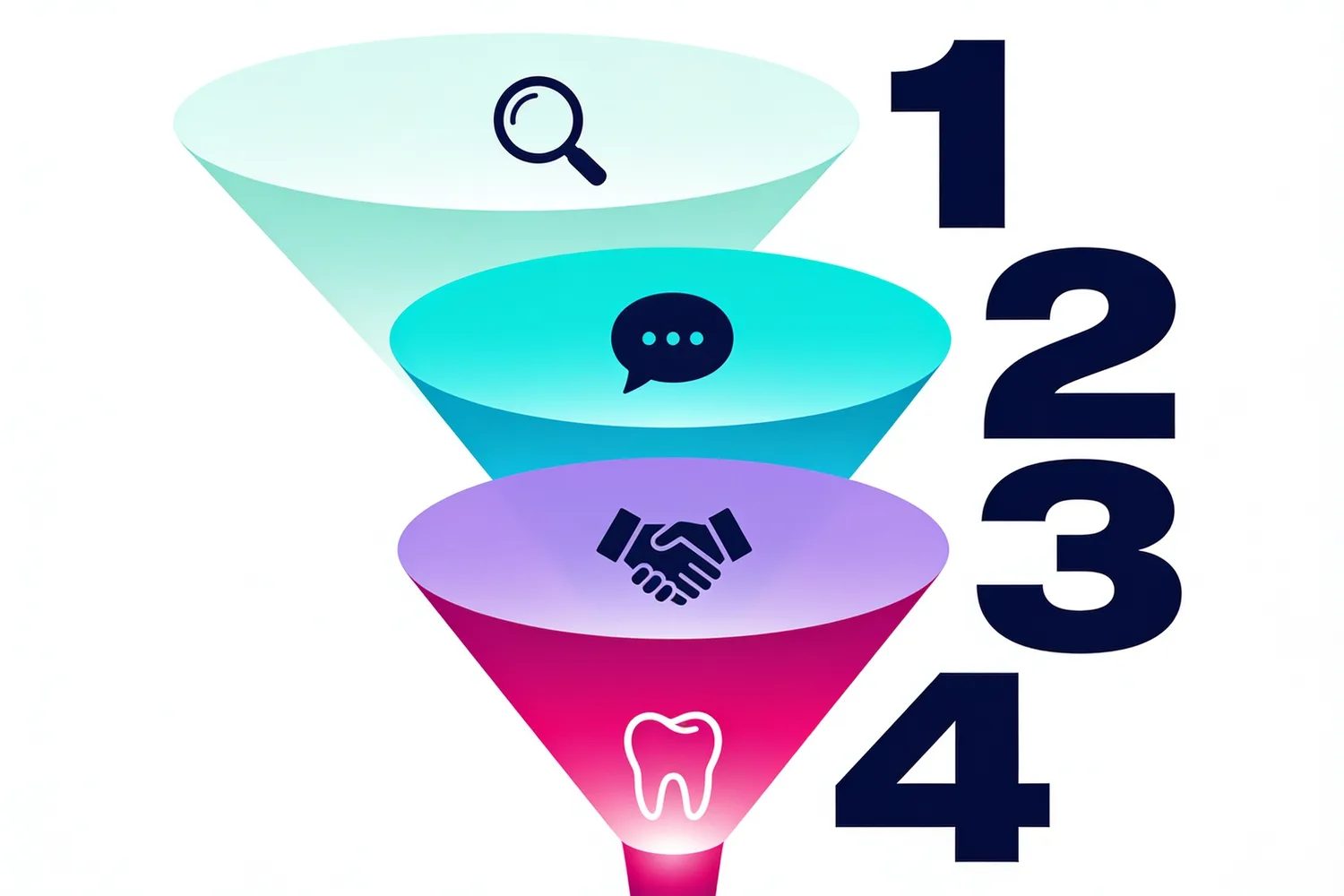
Here's how the implant decision actually unfolds, and what to do at each stage.
Stage 1: the quiet research phase
It starts with a search, usually at night. "Dental implant cost in India." "Implant vs bridge which is better." "Does implant surgery hurt." The patient is gathering courage as much as information. The clinic that answers these questions honestly — with real ranges, real timelines, real photos — becomes the trusted name before any competitor knows the patient exists. This is classic dental SEO territory, and implants are its most valuable keyword family.
Cost content matters most. Hiding prices loses this patient. A clear explainer — what drives the range, what's included, what EMI options exist — converts better than any discount, and keeps you inside the advertising rules too.
Stage 2: the consultation is the conversion
Most clinics think marketing ends when the consult is booked. For implants, the consult is where cases are won or lost. The numbers from our dental engagements are blunt: clinics converting under 40% of implant consults almost always have a communication problem, not a marketing problem. What moves the number: a visual treatment plan the patient can take home, a written quote with staged payments, and a follow-up message two days later that answers the questions they were too polite to ask. That follow-up lane is WhatsApp's home ground.
Stage 3: proof beats persuasion
Implant patients want evidence. Consented before-and-after cases, a short video of the doctor explaining the procedure in plain words, reviews that mention implants specifically. Ask your happy implant patients for a review within a week of their final crown — they're your most persuasive marketers and they usually say yes. Every piece of patient proof runs on written consent, no exceptions.
Should you run ads for implants?
Yes — implants are one of the few dental services where paid search pays comfortably, because the case value carries the click cost. The rules: bid on high-intent searches only ("implant cost", "implant clinic near me"), land on a dedicated implant page, and judge the campaign on cost per completed case, not per lead. A ₹15,000 monthly budget that produces two cases is a wildly profitable campaign. The same budget producing forty unanswered inquiries is a leak.
What does the implant landing page need?
Every implant click — paid or organic — should land on a page built for this one decision. The checklist: what an implant actually is, in one plain paragraph. The honest cost range and what drives it (implant brand, bone condition, crown choice), with EMI options stated. The process timeline, visit by visit. The implantologist's credentials and case count. Two or three consented cases with real timelines. Answers to the fear questions — pain, failure rates, age limits — written the way the doctor would say them across the desk. And booking lanes above the fold: call and WhatsApp both. This is the converting-page discipline applied to its highest-stakes dental use case.
The 30-day implant marketing starter
- Week 1: build the implant page properly. Pull your five best consented cases. Fix the cost explainer.
- Week 2: film the doctor answering the eight most common implant questions — one short video each.
- Week 3: launch the search campaign on high-intent keywords, pointed at the new page, call tracking on.
- Week 4: set the consult follow-up rhythm: visual plan in hand, written quote same day, WhatsApp check-in at 48 hours. Then review which stage leaks.
The economics, worked honestly
Say a single implant case nets ₹35,000–60,000. If your marketing produces four extra cases a month, that's ₹1.4–2.4 lakh of new revenue. Against that, a serious implant marketing effort — content, ads, proof, follow-up — costs ₹25,000–50,000 a month all-in. The return is obvious, but only if every stage holds: research content that ranks, consults that convert, proof that reassures, follow-up that persists. Weak stages don't fail quietly; they fail expensively.
In short: implants reward patient, honest, proof-heavy marketing like no other dental service. The full clinic-wide system is in our 90-day dental marketing plan — or get your implant funnel checked in a free audit.

Written by Gaurav Malik
Chief Growth Magician · Founder & Growth Strategist
Founder & Growth Strategist at Digital Magicians — India's healthcare-only growth agency.
Reviewed and published by Seema Dahiya for performance.
Meet the full team